I feel like the pandemic heightened everyone’s self-awareness, and coming out of it, people are choosing to focus more on solo activities, something that you can do while reflecting or expressing yourself. A lot of people picked up a camera and started taking photo walks. The camera is a tool to see the world, but not in the same way the eyes “sees”. The photo is a snapshot of the world and of the subconscious, which is why photography is a great tool for self expression. Portraiture reveals the person as much as how the photographer feels about the person, landscape photos reveal the earth as much as the photographer’s inner landscape. Food pics reveal the person is probably hungry, and so on.
On the flip side of the same coin, photography is a self effacing act. The impulse to take a photo is to detach from reality, objectify the subject, and make an instance of it in relation to the self without consciousness. This makes every photograph beautiful by default, and by reverse everything inside a photograph must be beautiful. Even the ugliness in the world is beautiful, kind of like “there’s beauty in violence” type shit. People can’t stop turning away from photographs of people with rare diseases, Chernobyl mutated animals, and war torn buildings, because people can find humanity in those photographs. If I take a photo of a grandma falling down the stairs, instead of thinking “shit I need to help her”, I’m thinking “this is worth a photograph” because there’s something beautiful and very human in that particular moment.
— beat switch —
I saw my parents’ wedding photos for the first time this year, they were taken in 1998. I never saw them that young before, now I’m approaching their age in those photos. It made me feel some shit. If they want to relive those memories again, my parents would have to fly across the pacific ocean since that album is currently sitting under the bed in another country.
The newlyweds in those photos look like my parents, but are they really? Two young people entering a new chapter in life, innocent from the reality waiting ahead. Twenty-six years later, how much of themselves in those photographs have they preserved? And if they had the chance to flip through that album more frequently during those 26 years, will it change how they feel about each other now?
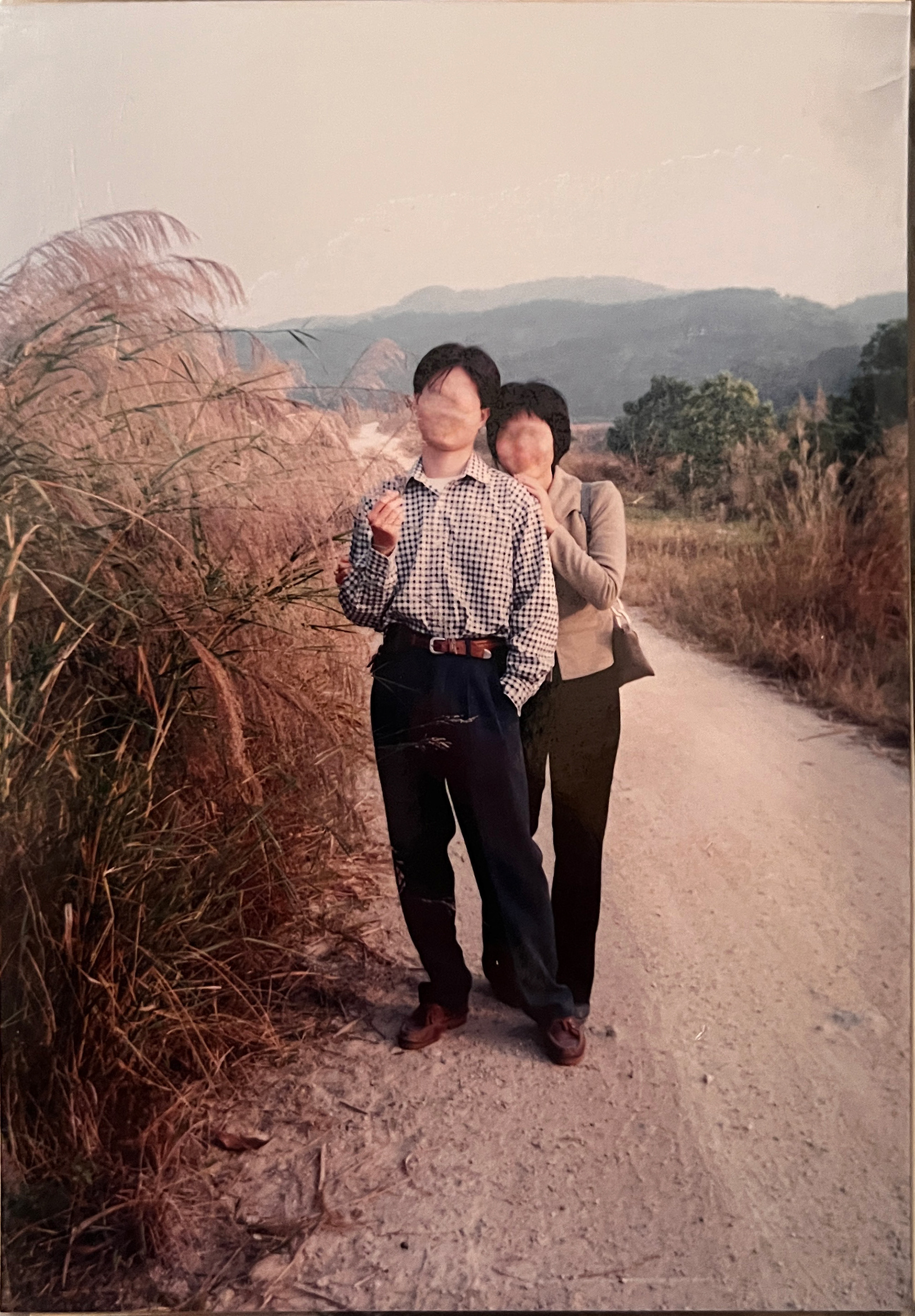
My parents, 199something
I was a competitive swimmer during all 4 years of high school. I was committed like I was going D1, making all 8 practices weekly and working as a lifeguard and all my friends were swimmers and all that stuff, but I wasn’t fast enough, but I digress. If my cloud photos from then only exist in a physical book, would I forget those times easier and stop going “damn I really miss my 6-pack” like every now and then?
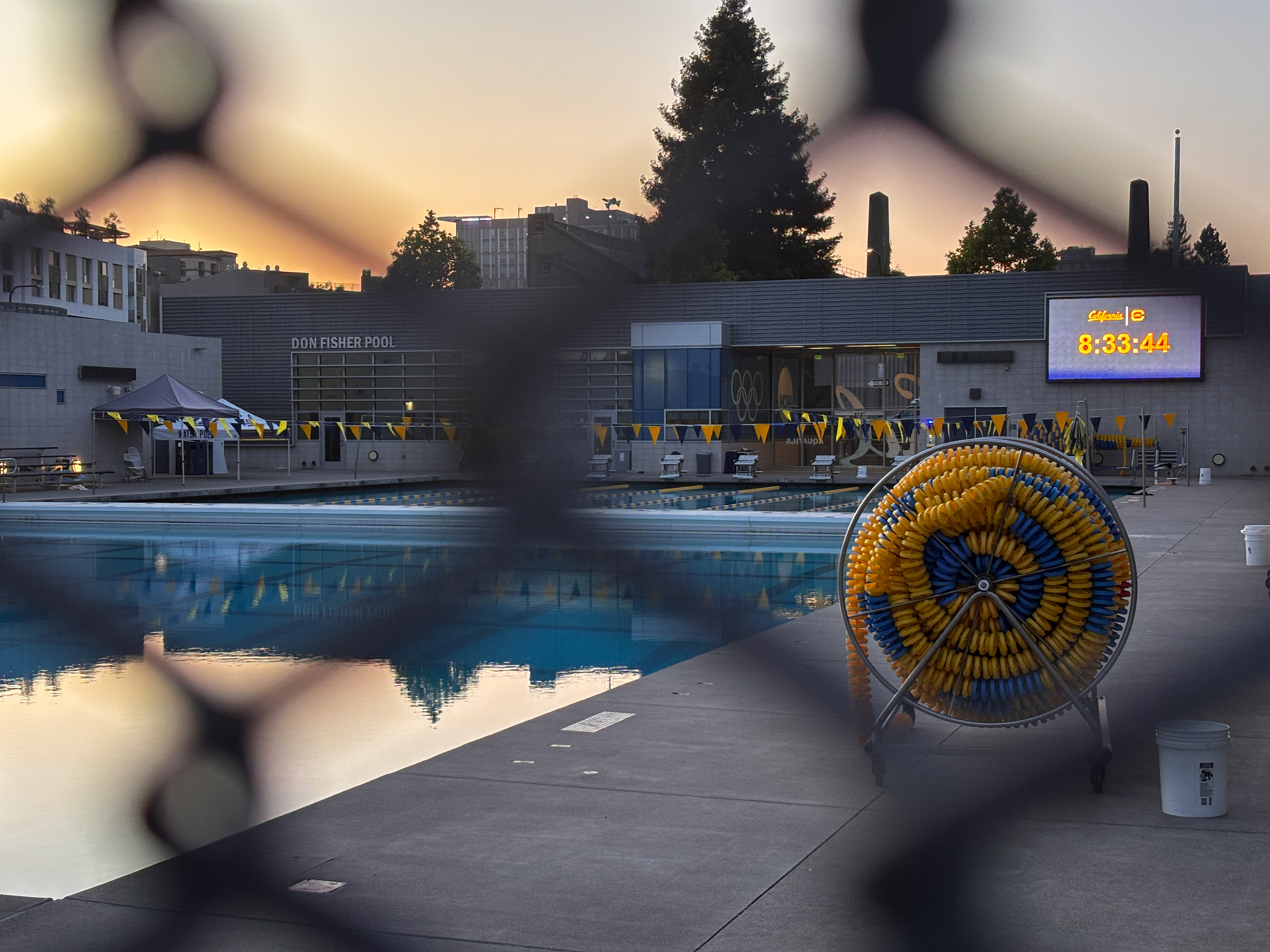
A pool at UC Berkeley inside the fence, 2025
— beat switch —
Susan Sontag in On Photography (1977):
“Needing to have reality confirmed and experience enhanced by photographs is an aesthetic consumerism to which everyone is now addicted…Ultimately, having an experience becomes identical with taking a photograph of it…Today everything exists to end in a photograph.”
Bo Burnham in an interview talking about social media (2019):
“…they think the world is virtual and this is just a thing to be seen and everything I’m doing is a performance that can be captured and looked back on in any moment. And I’m not living moments, I’m planning moments to look back on them.”
At its beginning, photography was primarily used to replace paintings for the upper class folks. By turning themselves into a physical object, their social status was solidified. Then the middle class picked it up once cameras were mass produced. Each evolution of technology democratizes photography more and produces more images as a result.
Today, more digital photos are consumed compared to physical photos, and their shareability is emerging as a new purpose for taking photos. The same process exclusively for commercial photography with DSLRs in the past is now affordable to the everyone with a phone. Imagine on a trip, we used to pose and freeze for like 5 seconds and wait for the shutter to go off once, now we take like 10 in a row or until the next person in line gets mad. Each photo is more or less the same, but a one degree difference in head tilt or hand placement is enough to give a different vibe. It’s then a standard practice to go back and delete all the unwanted copies, though some people would keep them all in camera roll. Photo professionals trained their eye on curating the “best” photo in order to sell products, the working class now adopted the same awareness and ability to curate how they, the individual human, wish to be perceived online.
Photographs naturally evolved to be the best tool to communicate identities because of their tendency to be viewed as truth. Photo collages are representations of personalities, and they serve to convey personal narratives to the viewer but equally to the photo taker as well. Selfies, or self portraits, are both an introspective documentation and an extroverted self-expression simultaneously.
Put on a nice suit for a formal occasion? Take a selfie to save the memory but also so someone else can look at me when I take it off. Feeling insecure about certain body part? Take a selfie to convince myself that I actually look better than I thought but also mark the beginning of my diet. Feeling sad during a breakup or a breakdown? Take a selfie to mark the scar but also to learn this lesson. Just cooked something? Take a photo of the food.
The camera’s ability to reaffirm or lie about reality has never been so amplified as the same person who acts as both the perpetrator and the receiver all at once. It is art and science at the same time. I think about it too much, I’m now in limbo, but here’s a Robert Frank quote to end on for street cred:
“There is one thing the photograph must contain, the humanity of the moment”. - Robert Frank